The field of AI-powered image generation is evolving at an unprecedented pace, and open-source models are now competing head-to-head with proprietary systems. One of the most remarkable milestones in this journey is Qwen-Image-2512, the December update of the Qwen-Image text-to-image foundational model released by the Qwen team. Hosted on Hugging Face, this model represents a significant leap in realism, detail fidelity, and text rendering quality.
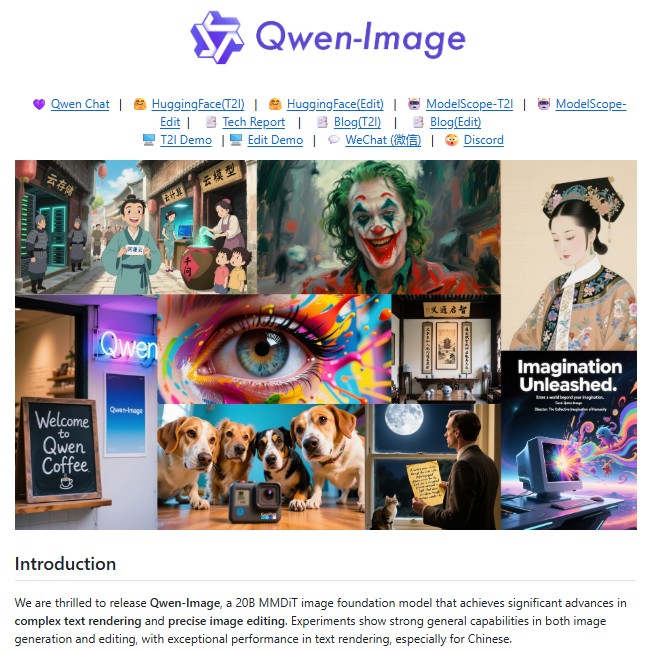
Qwen-Image-2512 is not just another incremental upgrade. It is a carefully engineered improvement that addresses some of the most persistent challenges in AI image generation, such as unnatural human faces, blurry textures, poor semantic alignment, and distorted text. With extensive benchmarking and real-world testing, it has emerged as one of the strongest open-source text-to-image models available today.
This blog explores Qwen-Image-2512 in depth, covering its features, performance, use cases, technical setup, and why it stands out in the competitive AI image generation landscape.
What Is Qwen-Image-2512?
Qwen-Image-2512 is a text-to-image diffusion model developed by the Qwen team as part of the broader Qwen AI ecosystem. It is released under the Apache 2.0 license, making it fully open-source and commercially usable.
This model is the December 2025 update of the original Qwen-Image model launched in August 2025. The update focuses on three core areas:
- Enhanced human realism
- Finer natural and texture details
- Improved text rendering and layout accuracy
The model is compatible with the Hugging Face Diffusers library and supports multiple aspect ratios, making it suitable for professional creative workflows.
Enhanced Human Realism
One of the most common criticisms of AI-generated images is the “AI look,” especially in human portraits. Faces often appear overly smooth, wax-like, or lacking natural imperfections. Qwen-Image-2512 significantly reduces this issue.
The model introduces:
- More accurate facial anatomy
- Better skin texture with visible pores and subtle lighting variations
- Sharper eye reflections and realistic gaze direction
- Improved hair rendering with clearly defined individual strands
Whether generating young adults, teenagers, or elderly individuals, the model demonstrates a strong understanding of age-related features such as wrinkles, facial structure changes, and skin tone variation. This makes Qwen-Image-2512 particularly valuable for lifestyle photography, character design, advertising, and storytelling applications.
Finer Natural and Environmental Detail
Beyond human subjects, Qwen-Image-2512 excels in rendering natural environments. Landscapes, wildlife, water bodies, and atmospheric effects show a noticeable improvement in realism and depth.
Key enhancements include:
- More accurate light diffusion in mist, fog, and water spray
- Richer color gradients in foliage and skies
- Highly detailed fur and animal textures
- Improved realism in rugged terrains like mountains and cliffs
For example, animal portraits display layered fur with realistic flow and texture, while environmental scenes capture complex lighting interactions such as sunlight filtering through dense vegetation. These improvements make the model suitable for nature photography simulations, educational visuals, and cinematic concept art.
Superior Text Rendering and Multimodal Composition
Text rendering has historically been a weak point for text-to-image models. Qwen-Image-2512 addresses this challenge with impressive results.
The model demonstrates:
- Accurate spelling and character formation
- Clean typography with minimal distortion
- Improved alignment and layout in posters, slides, and infographics
- Strong integration of text with visual elements
It can generate complex visuals such as PowerPoint-style slides, comparison charts, industrial infographics, and educational posters entirely from text prompts. This capability is especially valuable for marketing professionals, educators, and technical presenters who need visually structured content without manual design work.
Model Performance and Benchmarking
Qwen-Image-2512 has undergone more than 10,000 rounds of blind evaluations on AI Arena. According to these evaluations, it currently ranks as the strongest open-source text-to-image model, while remaining competitive with several closed-source alternatives.
These results highlight:
- Consistent adherence to prompt instructions
- Improved semantic understanding
- Reduced artifact generation
- Higher user preference scores in blind comparisons
This performance positions Qwen-Image-2512 as a reliable choice for both experimentation and production-level use.
Technical Setup and Quick Start
Getting started with Qwen-Image-2512 is straightforward using the Hugging Face Diffusers library.
The model supports:
- GPU and CPU inference
- Mixed precision using bfloat16 for efficiency
- Multiple aspect ratios for different content needs
Users can generate high-resolution images by specifying width, height, inference steps, and CFG scale. The model also supports negative prompts, allowing creators to explicitly avoid artifacts such as low resolution, distorted hands, or excessive smoothing.
This flexibility makes it suitable for developers, researchers, and creators working across different hardware environments.
Practical Use Cases
Qwen-Image-2512 unlocks a wide range of applications, including:
- Photorealistic character and portrait generation
- Marketing creatives and advertising visuals
- Educational posters and training materials
- Concept art for games and films
- Social media graphics and presentations
- AI-assisted design workflows
Its open-source nature also allows developers to fine-tune or integrate the model into custom pipelines, expanding its usefulness even further.
Why Qwen-Image-2512 Matters
The release of Qwen-Image-2512 signals a broader shift in the AI ecosystem. Open-source models are no longer just experimental alternatives; they are now setting benchmarks in quality and usability.
By delivering:
- High realism
- Strong semantic accuracy
- Advanced text rendering
- Commercial-friendly licensing
Qwen-Image-2512 empowers individuals and organizations to build powerful visual AI solutions without relying on closed platforms.
Conclusion
Qwen-Image-2512 is a landmark release in the world of text-to-image generation. With its dramatic improvements in human realism, environmental detail, and text rendering, it raises the standard for what open-source AI models can achieve. Backed by rigorous evaluation and a permissive license, it is well-positioned to become a go-to solution for creators, developers, and researchers alike.
As AI-generated visuals continue to shape digital communication, tools like Qwen-Image-2512 ensure that high-quality, realistic, and expressive image generation remains accessible to everyone.
Follow us for cutting-edge updates in AI & explore the world of LLMs, deep learning, NLP and AI agents with us.
Related Reads
- Orion: The Next Evolution in Visual AI for Advanced Reasoning and Multi-Modal Intelligence
- Fara-7B: Microsoft’s Breakthrough Agentic Model for Real-World Computer Use
- MiniMax-M2.1: An Open-Source Leap Toward Enterprise-Grade Agentic AI
- Supabase: The Complete Guide to the Open-Source Postgres Development Platform
- K-EXAONE-236B-A23B: A Deep Dive into LG AI Research’s Frontier Multilingual Reasoning Model