
Large Language Models (LLMs) have transformed the field of artificial intelligence by enabling machines to generate human-like text, perform reasoning tasks, and support zero-shot and few-shot learning. However, for many years, access to such powerful models was limited to a small number of well-funded organizations. To address this gap, Meta AI introduced OPT (Open Pre-Trained Transformer) models, aiming to make large-scale language models openly available for responsible research and experimentation.
One of the most accessible models in this family is facebook/opt-125m, hosted on Hugging Face. With 125 million parameters, OPT-125M serves as a lightweight yet powerful entry point into the OPT ecosystem. This article provides a detailed, SEO-friendly overview of OPT-125M, covering its architecture, training process, datasets, use cases, limitations and importance in the open-source AI landscape.
What Is OPT-125M?
OPT-125M is the smallest model in the OPT (Open Pre-Trained Transformer) family released by Meta AI in May 2022. The OPT series includes models ranging from 125 million to 175 billion parameters, designed to closely match the performance and scale of GPT-3-class models while remaining openly accessible.
OPT-125M is a decoder-only transformer model trained using a causal language modeling (CLM) objective. It is primarily trained on English text, with limited exposure to other languages via Common Crawl data.
Vision Behind the OPT Project
Meta AI introduced OPT with a clear mission: to democratize access to large language models and enable transparent, reproducible research.
The OPT initiative was created to:
- Allow researchers to study LLM behavior
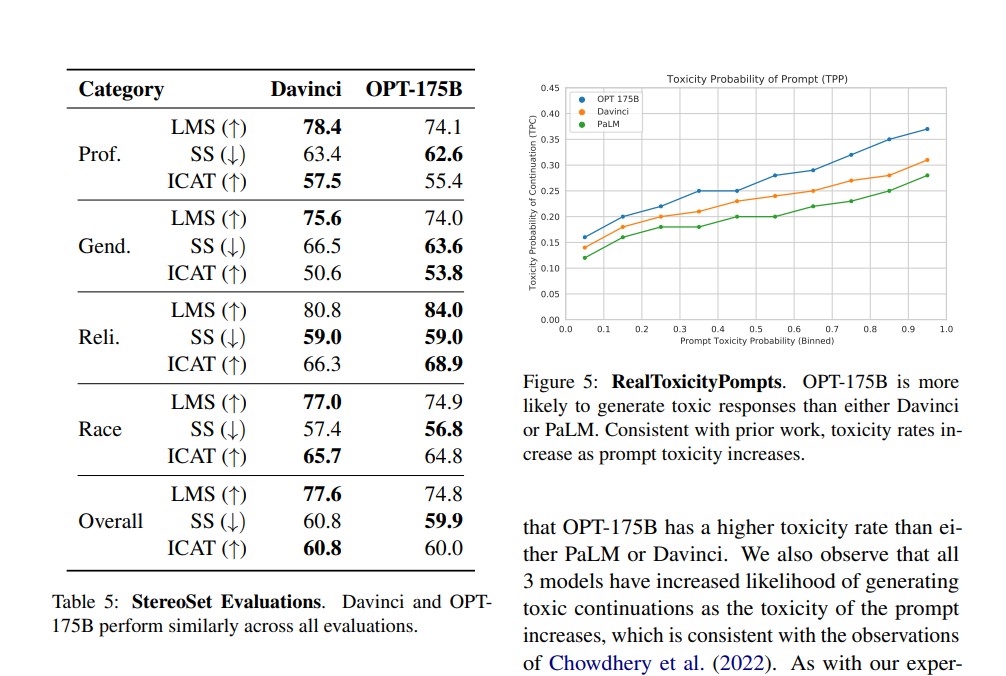
- Enable analysis of bias, robustness and toxicity
- Promote responsible AI development
- Reduce dependence on closed, paid APIs
By releasing models like OPT-125M, Meta AI opened the door for universities, startups and independent researchers to explore large-scale NLP models without extreme hardware requirements.
Model Architecture and Technical Details
OPT-125M follows the same architectural principles as GPT-3-style models.
Key Technical Specifications
- Model type: Decoder-only Transformer
- Parameters: 125 million
- Tokenization: GPT-2 byte-level BPE
- Vocabulary size: 50,272
- Context length: 2,048 tokens
- Objective: Causal Language Modeling
- Primary language: English
The model predicts the next token based only on previous tokens, ensuring autoregressive text generation.
Training Data Overview
Meta AI trained OPT-125M on a massive and diverse dataset composed of 180 billion tokens, totaling approximately 800GB of text data.
Main Data Sources
- BookCorpus (over 10,000 unpublished books)
- CC-Stories (filtered Common Crawl stories)
- The Pile (selected subsets such as OpenWebText2, Project Gutenberg, Wikipedia, OpenSubtitles, DM Mathematics, and HackerNews)
- Pushshift Reddit dataset
- CCNewsV2 (English news articles)
The validation dataset consisted of approximately 200MB of sampled pretraining data.
Training Procedure
OPT-125M was trained using industry-standard preprocessing and optimization techniques.
Preprocessing
- Byte Pair Encoding (BPE) tokenization
- Input sequences of 2,048 tokens
- Removal of repetitive or low-quality content
- Formatting for efficient transformer training
Large-Scale Training
While OPT-125M itself does not require extreme hardware, the largest OPT-175B model was trained using:
- 992 NVIDIA A100 (80GB) GPUs
- Approximately 33 days of continuous training
This ensures architectural consistency across the entire OPT family.
How to Use OPT-125M
OPT-125M can be easily used with Hugging Face Transformers.
Example: Text Generation
from transformers import pipeline

generator = pipeline("text-generation", model="facebook/opt-125m")

generator("What are we having for dinner?")
By default, the output is deterministic. Sampling can be enabled for creative outputs.
Intended Use Cases
OPT-125M is suitable for:
- NLP education and learning
- Research experimentation
- Benchmarking and evaluation
- Text generation prototypes
- Fine-tuning for downstream tasks
- Low-resource environments
Because of its smaller size, OPT-125M runs efficiently on modest hardware compared to larger LLMs.
Limitations and Bias
Like all large language models trained on internet data, OPT-125M has known limitations.
Key Limitations
- May hallucinate incorrect information
- Inherits bias from training data
- Not safe for unsupervised human interaction
- Limited reasoning depth compared to larger models
- Reduced generation diversity in some contexts
Meta AI explicitly states that bias and safety concerns affect all OPT models, including fine-tuned versions.
Ethical and Safety Considerations
The training data includes public internet content, which may contain offensive, misleading, or harmful material. As a result:
- Outputs should not be assumed to be factual
- Deployers must add moderation layers
- Human-facing applications require careful evaluation
OPT-125M is best used in controlled research and development environments.
OPT-125M vs Larger OPT Models
While OPT-125M is efficient and accessible, it differs significantly from larger OPT variants.
| Feature | OPT-125M | OPT-175B |
| Parameters | 125M | 175B |
| Hardware Needs | Low | Extremely High |
| Reasoning Ability | Basic | Advanced |
| Use Case | Learning & Research | Large-scale Production Research |
OPT-125M serves as a stepping stone to understanding larger LLMs.
Why OPT-125M Matters Today
Despite newer models like LLaMA, GPT-4, and Qwen, OPT-125M remains important because:
- It is fully open and transparent
- It supports reproducible research
- It has extensive documentation
- It is widely supported across frameworks
- It enables experimentation without massive costs
Its availability has helped shape modern open-source AI research practices.
Conclusion
OPT-125M by Meta AI is a foundational open-source language model that plays a critical role in democratizing access to transformer-based AI systems. While it does not match the reasoning power of modern billion-parameter models, it excels as a research-friendly, lightweight, and transparent tool for understanding how large language models work.
For students, researchers, and developers seeking a reliable entry point into open-source NLP, OPT-125M remains a valuable and relevant model in the evolving AI ecosystem.
Follow us for cutting-edge updates in AI & explore the world of LLMs, deep learning, NLP and AI agents with us.
Related Reads
- Qwen3-Next-80B-A3B-Instruct: A Breakthrough in Efficient Large Language Models
- Gemma-3-1B-IT: Google’s Lightweight Multimodal Open-Source Language Model Explained
- LangChain: The Ultimate Framework for Building Reliable LLM and AI Agent Applications
- Dolphin 2.9.1 Yi 1.5 34B : A Complete Technical and Practical Overview
- GLM-4.7: A New Benchmark in Agentic Coding, Reasoning and Tool-Driven AI
2 thoughts on “OPT-125M by Meta AI : A Complete Guide to Open Pre-Trained Transformer Models”