
As AI systems continue to evolve, the way we communicate with them has transformed into a new skillset known as prompt engineering. Whether you are a developer, researcher, student, or AI enthusiast, the ability to design effective prompts can dramatically enhance the output quality and reliability of large language models (LLMs). The growing importance of prompt engineering has led to the creation of comprehensive learning resources, and one of the most respected among them is the Prompt Engineering Guide by DAIR.AI.
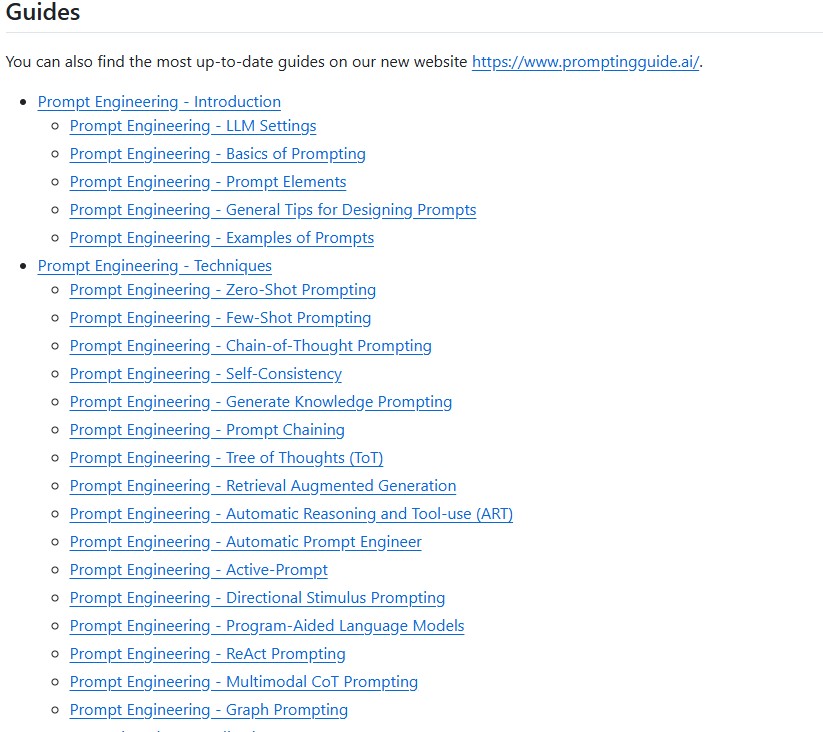
This open-source repository has gained significant attention among millions of learners due to its practical guides, expansive examples, in-depth techniques, and real-world applications for LLMs. From basic prompting tips to advanced techniques like chain-of-thought, retrieval-augmented generation and agent-based prompting, the guide serves as a central hub for anyone looking to master interactions with AI systems.
In this blog, we will explore the key features, learning pathways, and practical benefits of DAIR.AI’s Prompt Engineering Guide, explaining why it has become a top resource for modern AI developers.
What Is the Prompt Engineering Guide by DAIR.AI?
DAIR.AI’s Prompt Engineering Guide is an open-source compilation of guides, research papers, notebooks, lessons, code examples, and best practices for interacting with LLMs. It is constantly updated by contributors worldwide, ensuring it reflects the latest advancements in AI.
The guide covers:
- Foundational concepts of prompt engineering
- Advanced prompting frameworks
- Agent-based prompting methodologies
- Real-world applications across various domains
- Best practices for evaluation and safety
- Resources for datasets, tools, and model comparisons
It is used by more than three million learners worldwide and has been featured in publications such as Forbes, The Wall Street Journal, and Markettechpost.
Why Prompt Engineering Matters
Prompt engineering is not simply about writing instructions. It is a discipline that helps improve the quality, coherence, truthfulness, and safety of AI outputs. Effective prompting allows users to:
- Improve performance on reasoning and math tasks
- Extract accurate information from models
- Reduce hallucinations and biases
- Design structured workflows for complex tasks
- Leverage LLMs for coding, automation, and research
- Build AI agents that behave predictably
With industries increasingly adopting AI for customer service, analytics, healthcare, education, and automation, prompt engineering has become an essential skill for future-forward careers.
Key Sections of the Prompt Engineering Guide
1. Introduction to Prompt Engineering
This section covers foundational knowledge, explaining what prompts are, how LLMs interpret them, and why prompt structure impacts output quality. It introduces new learners to the importance of clarity, context, constraints, and examples in prompt design.
2. Prompting Techniques
The guide dives deep into powerful prompting techniques, including:
- Zero-shot prompting
- Few-shot prompting
- Chain-of-thought prompting
- Self-consistency prompting
- ReAct prompting
- Tree-of-Thoughts reasoning
- Program-aided prompting
- Directional stimulus prompts
- Automatic prompt engineering methods
Each technique is accompanied by examples, use cases, and explanations of when and why to use it.
3. Retrieval-Augmented Generation (RAG)
RAG has become a core method for improving factual accuracy. The guide covers:
- Introduction to RAG
- How to build RAG pipelines
- How to generate high-quality synthetic datasets
- How to evaluate and refine retrieval quality
This is particularly valuable for developers building enterprise chatbots or knowledge-based systems.
4. AI Agents and Tool Use
With AI agents gaining popularity, the guide provides insights into:
- Context engineering
- Planning and reasoning frameworks
- Tool calling (API integration)
- Multi-agent workflows
These concepts help developers build more intelligent, task-driven AI systems.
5. Applications Across Domains
The guide contains dedicated sections for real-world applications:
- Coding
- Classification
- Reasoning
- Mathematics
- Question answering
- Creativity
- Information extraction
- Summarization
Each application is supported by curated examples tailored to common industry use cases.
6. Risks, Misuses, and Safety
A responsible use section addresses:
- Hallucinations
- Biases
- Adversarial prompting
- Factuality challenges
This ensures that the guide not only teaches power but also teaches responsibility.
Learning Resources Included in the Guide
DAIR.AI’s Prompt Engineering Guide goes beyond text-based documentation. It includes:
- A full one-hour video lecture
- Jupyter notebooks with hands-on examples
- Slides for teaching and self-learning
- Multilingual support across 13 languages
- A community Discord for support
- Open-source lessons for deep practice
This makes the guide suitable for independent learners, universities, and professionals alike.
Why Developers Prefer This Guide
The Prompt Engineering Guide has become one of the most starred repositories on GitHub because it delivers:
- Up-to-date prompting research
- Practical, usable examples
- Clear explanations for complex concepts
- Compatibility with multiple models including GPT, Claude, LLaMA, Gemini, Mixtral, and others
- A complete library of tools, datasets, and frameworks
- A community-driven expansion of content
Its open-source nature enables developers from around the world to contribute, translating cutting-edge AI research into easy-to-understand guides.
How to Get Started
The guide can be accessed through:
- GitHub repository
- Dedicated web version
- DAIR.AI Academy courses
Beginners can start with the introduction and basic prompting techniques, while advanced practitioners can explore RAG, agent architectures, and adversarial prompting.
The guide can also be run locally by installing dependencies and using pnpm to host it on a local server, making it easier for contributors or offline learners.
Conclusion
DAIR.AI’s Prompt Engineering Guide is an essential resource for anyone working with LLMs. With its comprehensive coverage of techniques, real-world applications, safety considerations, and hands-on learning materials, it stands as one of the most influential and practical guides in the AI community. Whether you are teaching AI, building applications, conducting research, or improving your skills, this guide provides everything you need to master the art and science of prompt engineering.
As AI continues to shape industries across the world, understanding how to communicate effectively with these systems will remain a critical skill. DAIR.AI’s guide equips learners with the knowledge and confidence to design better prompts, build smarter workflows, and develop AI systems that are more accurate, reliable, and impactful.
Follow us for cutting-edge updates in AI & explore the world of LLMs, deep learning, NLP and AI agents with us.
Related Reads
- Parlant: The AI Agent Framework Built for Real-World Reliability
- Motif-2-12.7B: A Breakthrough in Efficient Large Language Model Architecture
- Lumine: The Next Step Toward Human-Like AI Agents in 3D Worlds
- dots.ocr: The Future of Multilingual Document Understanding with Vision-Language Models
- The Ultimate AI & Machine Learning Roadmap: A Complete Guide for Beginners
1 thought on “The Ultimate Guide to Prompt Engineering: A Deep Dive into DAIR.AI’s Leading Resource”